Health & Hydration · Updated November 2026
20 Health Benefits of Drinking Water: Physical, Psychological and Nutritional
You feel tired by 3 p.m. Your head aches a little. You can't focus on the email in front of you. So you reach for coffee, a snack, or another scroll on your phone. But what if the fix was sitting in your kitchen tap the whole time?
Water is the most boring drink in the world. It has no flavor, no fancy label and no calories. Yet it is the one thing your body truly cannot live without. Most of your organs are made mostly of water, and almost every job your body does depends on it.
In this guide, we break down 20 real health benefits of drinking water, grouped into three parts: physical, psychological and nutritional. Every benefit is backed by a trusted source like the CDC, the NIH or peer-reviewed research. No hype, no miracle claims. Just simple facts that can help you feel better, starting today.
Quick Facts: Water And Your Body
| Brain and heart | About 73% water [2] |
|---|---|
| Lungs | About 83% water [2] |
| Muscles and kidneys | About 79% water [2] |
| Daily fluid (men) | About 15.5 cups (3.7 liters) from all drinks and food [3] |
| Daily fluid (women) | About 11.5 cups (2.7 liters) from all drinks and food [3] |
| Calories in water | Zero |
Why Is Drinking Water So Important?
Think of your body like a busy city. Water is the road system. It carries food to every house, takes the trash away, cools things down when it gets hot, and keeps everything moving smoothly.
When the roads dry up, the whole city slows down. That is what dehydration does. According to the CDC, not drinking enough water can lead to unclear thinking, mood changes, overheating, constipation and kidney stones [1]. And the tricky part? You may not feel thirsty until you are already a little low.
The good news is that the fix is cheap, simple and available to most people right now. Let's look at exactly what a glass of water can do for you.
Quick action: before you read on, go pour yourself a glass of water. Your brain will thank you by the end of this article.
Physical Health Benefits of Drinking Water
Let's start with your body. These are the benefits you can feel in your muscles, joints, heart and gut.
1. Keeps your body temperature normal
Ever notice how you sweat on a hot day or during a workout? That sweat is your body's cooling system, and it runs on water. The CDC lists keeping a normal temperature as one of the main jobs water does [1]. When you are low on fluids, your body has a harder time cooling down, and you can overheat fast. On hot days, keep a bottle close and sip often.
2. Cushions and lubricates your joints
Your knees, hips and shoulders take a beating every day. Water helps lubricate and cushion your joints, according to the CDC [1]. Think of it like oil in a door hinge. Less squeak, more smooth movement. If you walk, run, lift or garden, staying hydrated is a simple way to take care of the joints you depend on.
3. Protects your spinal cord and brain
Water does more than fill you up. It also protects your spinal cord and other sensitive tissues [1]. The U.S. Geological Survey explains that water acts like a shock absorber for the brain and spinal cord [2]. Every step you take, every bump in the road, water is quietly helping to protect your most important parts.
4. Helps your heart pump more easily
Your heart never takes a day off. The American Heart Association says that keeping your body hydrated helps the heart pump blood more easily through the blood vessels to the muscles [4]. When you are dehydrated, your heart has to work harder to do the same job. A few extra glasses a day is one of the easiest gifts you can give your heart.
5. Boosts physical performance
If you play sports, hit the gym or work a physical job, this one matters. The American College of Sports Medicine advises drinking during exercise to avoid losing more than 2% of your body weight in water, because bigger losses can hurt performance [5]. For a 180-pound person, 2% is just 3.6 pounds of sweat. That can happen in one hot afternoon. Drink before, during and after activity.
6. Flushes waste out of your body
Your body makes waste all day long. Water is how it gets rid of it, through urine, sweat and bowel movements [1]. Your kidneys need enough fluid to filter your blood and flush out what you don't need. A simple check: pale yellow urine usually means you are drinking enough. Dark yellow is a sign to drink more.
7. Helps prevent constipation
Nobody likes to talk about it, but constipation is uncomfortable and common. The CDC names constipation as one of the problems dehydration can cause [1]. Water helps keep things soft and moving in your gut, especially when you eat more fiber. If you are adding more fruits, veggies or whole grains to your plate, add more water too.
8. May lower your risk of kidney stones
Anyone who has had a kidney stone will tell you it is one of the worst pains of their life. The NIH's kidney institute says that drinking enough liquid, mainly water, is the most important thing you can do to prevent kidney stones, and many experts suggest six to eight 8-ounce glasses a day [6]. To be fair, a large 2026 study from Duke found that a hydration program did not reduce new stones in people who already had them, so water is not a guaranteed cure [7]. Still, staying hydrated remains the first piece of advice doctors give. If you have had stones before, talk to your doctor about your own target.
9. Can reduce repeat bladder infections
Urinary tract infections (UTIs) are painful and keep coming back for many women. In a 2018 trial in JAMA Internal Medicine, women who usually drank little and added about 1.5 liters of water a day had about 1.7 bladder infections in a year, compared with 3.2 for women who did not change their habits [8]. That is nearly half as many. They also needed fewer antibiotics. Small habit, big relief.
10. Supports long-term heart health as you age
This one surprised a lot of doctors. Researchers at the NIH's heart institute studied more than 15,000 adults over about 25 years. They found that people whose blood tests suggested they were often a little dehydrated in middle age had a higher risk of heart failure later in life [9]. The lead researcher said drinking enough water may help reduce long-term heart risks, much like cutting salt. What you drink at 45 may protect your heart at 75.
Action step: fill a large bottle in the morning and keep it where you can see it. Out of sight is out of mind, and in sight is in your body.
Psychological Benefits of Drinking Water
Water doesn't only help your body. It helps your mind too. Your brain is about 73% water [2], so it makes sense that it notices when you run low.
11. Helps you think more clearly
That foggy feeling in the afternoon might not be your boss or your bad sleep. The CDC lists unclear thinking as an effect of dehydration [1]. Research suggests that losing around 2% of your body water can hurt mental performance, and some studies find effects even earlier [11]. Before a big meeting, exam or drive, a glass of water is one of the simplest ways to show up sharper.
12. Supports a better mood
Ever been cranky for no reason? A study of healthy young women at the University of Connecticut found that mild dehydration of just 1.36% of body weight made mood worse, lowered concentration and made tasks feel harder [10]. That is a level many of us hit on a normal busy day without noticing. Sometimes, a glass of water is a mood reset.
13. May reduce headaches
Headaches are one of the most common signs that you need more fluid. In that same study, mild dehydration also led to more headache symptoms [10]. Not every headache is from dehydration, of course. But next time your head starts to throb, try drinking a full glass of water and waiting 30 minutes before reaching for anything else.
14. Gives you more energy
Feeling drained? Mayo Clinic notes that even mild dehydration can drain your energy and make you tired [3]. Many people reach for sugary drinks or another coffee, when what their body really needs is water. Swap your next "energy drink" for a cold glass of water and see how you feel.
15. Helps kids focus at school
Parents, this one is for you. In a study of 58 children aged 7 to 9, kids who got an extra drink of water did better on visual attention tasks than kids who did not [12]. Sending your child to school with a water bottle is a small step that may help them pay attention in class.
Action step: set three phone reminders today, at 10 a.m., 2 p.m. and 5 p.m., each one saying "drink a glass of water." Notice how your focus and mood feel by tonight.
Nutritional Benefits of Drinking Water
Water has no vitamins on the label. But it plays a huge role in how you eat, digest and use your food.
16. Cuts empty calories from sugary drinks
Water has zero calories. Swapping just one 20-ounce sugary soda for water saves you about 240 calories, according to the CDC [14]. Do that once a day, and in a year it adds up to tens of thousands of calories you never needed. It is one of the easiest diet changes you will ever make.
17. Supports healthy weight loss
Want a simple trick backed by science? In a 12-week study of middle-aged and older adults on a lower-calorie diet, people who drank 500 ml (about 2 cups) of water before each meal lost about 2 kg more than those who did not, which was about 44% more weight loss [13]. Water before meals may help you feel fuller, so you eat a little less without trying hard.
18. Helps you digest food and carry nutrients
The food you eat is only useful if your body can break it down and move it to your cells. The USGS explains that the carbohydrates and proteins your body uses as food are metabolized and transported by water in the bloodstream [2]. In short, water is the delivery truck for your nutrition. No truck, no delivery.
19. Can add minerals to your diet
Depending on where it comes from, drinking water can contain minerals like calcium and magnesium. The World Health Organization published a full report on how these minerals in drinking water may contribute to your daily intake [15]. The amount varies a lot from place to place, so check your local water report. But it is a nice bonus your tap may be giving you.
20. Protects your teeth
Here is a benefit many people forget. In many U.S. towns, tap water has a small, safe amount of fluoride added. The CDC says this water fluoridation reduces tooth decay by about 25% in children and adults [16]. Choosing tap water over sugary drinks protects your teeth in two ways: less sugar, plus a little fluoride.
Action step: replace one sugary drink today with a glass of water. Just one. Then do it again tomorrow.
How Much Water Should You Drink A Day?
You have probably heard "eight glasses a day." It is easy to remember, and Mayo Clinic calls it a reasonable goal [3]. But the real number depends on you.
The U.S. National Academies suggest about 15.5 cups (3.7 liters) a day for men and 11.5 cups (2.7 liters) a day for women, counting all fluids from drinks and food [3]. About a fifth of that usually comes from food, like fruit, veggies and soup.
You need more when:
- It is hot outside, or you are very active [1]
- You have a fever, diarrhea or vomiting [1]
- You are pregnant or breastfeeding [3]
A word of balance: more is not always better. Mayo Clinic warns that drinking far too much water, especially during long endurance events, can dilute the sodium in your blood, a rare but serious condition called hyponatremia [3]. For most healthy people, drinking when thirsty and keeping your urine pale yellow is a great guide. If you have heart, kidney or liver problems, ask your doctor what is right for you.
Signs You Need To Drink More Water
Your body sends signals. Learn to read them:
- Feeling thirsty or having a dry, sticky mouth
- Dark yellow urine, or peeing less often than usual
- Headache or trouble focusing
- Feeling tired, cranky or dizzy
- Constipation
If you notice two or more of these, start with a glass of water now. If symptoms are severe, like confusion, fainting or a racing heart, get medical help right away.
Easy Tips To Drink More Water Every Day
Knowing the benefits is one thing. Actually drinking more is another. These small habits make it easy:
- Carry a reusable bottle and refill it during the day [1].
- Tie water to habits you already have, like a glass after brushing your teeth or with every meal.
- Add flavor naturally with a slice of lemon, lime, cucumber or a few berries [1].
- Eat water-rich foods like watermelon, cucumber, oranges and lettuce.
- Choose water when eating out. It is free and it saves calories.
- Track it with an app or a simple tally on a sticky note.
What If Clean Water Is Not Available?
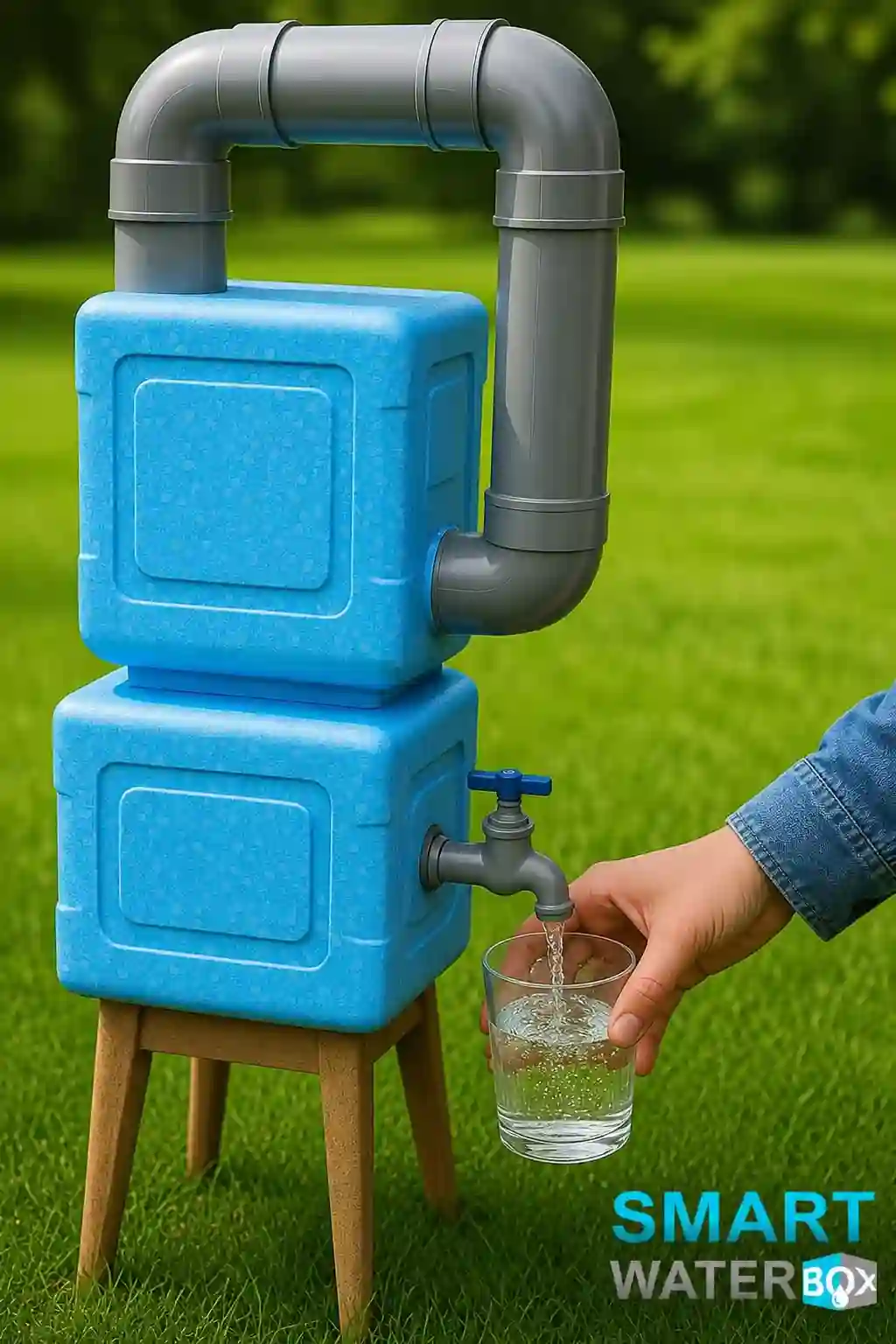
All these benefits depend on one thing: having safe water when you need it. Most of the time, we take that for granted. But storms, power outages and boil-water notices happen more often than we think.
That is why many families are building a backup plan. Emergency planners suggest storing at least one gallon of water per person per day for several days [17]. Some people go a step further and learn to make their own water from the humidity in the air.
If that idea interests you, our in-depth Smart Water Box review explains how a DIY atmospheric water generator works, what it costs and its honest limits. It is not for everyone, but for preppers, homesteaders and off-grid families, it is a practical way to make sure your family never goes without the water it needs.
Want a backup water source for your home? See the Smart Water Box guide on the official site →
Health Benefits of Drinking Water: FAQs
What happens to your body when you start drinking more water?
Many people notice more energy, fewer headaches, better focus and more regular bowel movements within a few days. Results vary from person to person.
Is it good to drink water first thing in the morning?
Yes. You go many hours without fluid while you sleep, so a glass of water in the morning is an easy way to start the day hydrated.
Does coffee or tea count toward my daily water?
Yes, most drinks count toward your daily fluids. Plain water is still the best choice because it has no sugar or calories.
Can drinking water help with weight loss?
It can help. Water has zero calories, and one study found that drinking 2 cups before meals led to more weight loss on a lower-calorie diet [13]. It works best with healthy eating, not as a magic fix.
Can you drink too much water?
It is rare for healthy adults, but yes. Drinking extremely large amounts in a short time, often during long endurance events, can lower blood sodium to dangerous levels [3].
Is cold water or warm water better?
Both hydrate you. Drink the temperature you enjoy most, because that is the water you will actually drink.
Final Thoughts: Your Healthiest Habit Is Also Your Simplest
We spend so much money chasing health. Supplements, gadgets, special diets. Yet one of the most powerful habits is free, flowing from your tap right now.
From protecting your heart and joints, to lifting your mood and focus, to helping you manage your weight, the health benefits of drinking water touch almost every part of your life. And unlike most health advice, you can start this one in the next 30 seconds.
So here is your challenge. Drink one more glass of water today than you did yesterday. Then do it again tomorrow. In a week, notice how you feel. Your body has been asking for this for a long time.
Make Sure Your Family Always Has Clean Water
Learn how to build a backup water source from the air around you.
Read Our Smart Water Box ReviewHealth disclaimer: This article is for general information only and is not medical advice. Talk to your doctor before making big changes, especially if you have heart, kidney or liver conditions. This site contains affiliate links; read our full Disclaimer.
References
- Centers for Disease Control and Prevention. About Water and Healthier Drinks.
- U.S. Geological Survey, Water Science School. The Water in You: Water and the Human Body.
- Mayo Clinic. Water: How much should you drink every day?
- American Heart Association. Staying Hydrated – Staying Healthy.
- American College of Sports Medicine (2007). Position stand: Exercise and fluid replacement. Med Sci Sports Exerc, 39(2), 377–390.
- National Institute of Diabetes and Digestive and Kidney Diseases (NIDDK). Eating, Diet, & Nutrition for Kidney Stones.
- HealthDay News (March 2026). Can You Drink Enough Fluids To Prevent Kidney Stones? Maybe Not, New Study Says.
- Hooton, T.M. et al. (2018). Effect of increased daily water intake in premenopausal women with recurrent urinary tract infections. JAMA Internal Medicine. Summary: University of Miami.
- National Heart, Lung, and Blood Institute (2022). Good hydration may reduce long-term risks for heart failure.
- Armstrong, L.E. et al. (2012). Mild dehydration affects mood in healthy young women. Journal of Nutrition, 142(2), 382–388.
- Ganio, M.S. et al. (2011). Mild dehydration impairs cognitive performance and mood of men. British Journal of Nutrition.
- Edmonds, C.J. & Burford, D. (2009). Should children drink more water? The effects of drinking water on cognition in children. Appetite, 52(3), 776–779.
- Dennis, E.A. et al. (2010). Water consumption increases weight loss during a hypocaloric diet intervention in middle-aged and older adults. Obesity, 18(2), 300–307.
- Centers for Disease Control and Prevention. Water: Meeting Your Daily Fluid Needs (archived).
- World Health Organization (2009). Calcium and magnesium in drinking-water: Public health significance.
- Centers for Disease Control and Prevention. CDC Scientific Statement on Community Water Fluoridation.
- Ready.gov (FEMA). Determine Water Needs.